Select NOAA-NWS Forecast Office Text Products
(Product availability varies with seasons, forecast office, and weather.)
Forecast Discussion for Aberdeen, SD
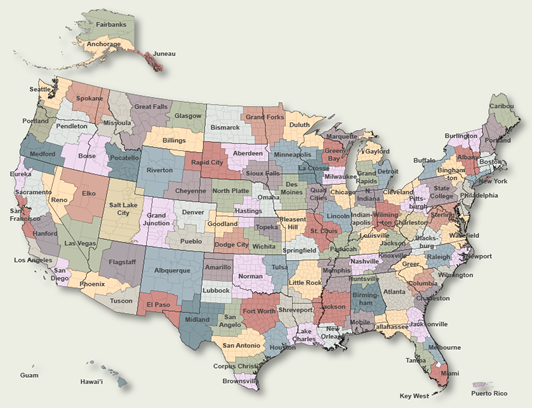
To Select Another NWS Office Click on Map or Choose from List
|
| Select Forecast Office: | Select Product: |
474 FXUS63 KABR 270612 AFDABR Area Forecast Discussion National Weather Service Aberdeen SD 112 AM CDT Tue Oct 27 2026 .KEY MESSAGES... - Low clouds and fog, with drizzle possible, will linger over the region this morning with gradually clearing skies over portions of central South Dakota through this afternoon and evening. - Patchy to areas of fog is possible late tonight through early Wednesday morning. It could be dense at times, especially between the Missouri and James River with a probability of visibility of 1/4th mile or less at 50 to 80%. - Rain chances return to the region Wednesday, with the highest chances of 60-85% James Valley and eastward by the midday through the afternoon. Weak thunderstorms are possible. && .DISCUSSION... Issued at 105 AM CDT Tue Oct 27 2026 As of 1am, radar indicates light rain showers mainly along and east of the James River (with the bulk of it over east central SD) as temps remain above freezing, in the upper 30s. The wrap around portion, that we saw as snow earlier, has now moved off into ND/MN, but there is still the potential for light flurries lingering over north central to the James River, mainly along the ND/SD border. Winds are out of the northeast between 10-15 mph with visibilities down to 5-6SM at KABR and KATY and down to 7SM at KMBG. CAMs/REFS/NBM overall agree on the last of the precip exiting NESD/MN by ~12Z or so. By this time, its negatively tilted upper wave`s axis will be over eastern ND through MN and clipping far NESD and its nearly stacked surface low hovering over southwestern/south central MN and SD border. Through the morning this entire system will continue to track off towards the northeast. However, REFs/NBM indicates low stratus clouds/fog will be hanging around through much of the morning before starting to clear out over south central SD midday or so. These clouds will somewhat clear across central and potentially portions of NESD/MN this evening through the early parts of tonight. With these low clouds/moisture, soundings do indicate we could be dealing with ongoing drizzle (maybe light freezing drizzle over north central for the next couple of hours) given the classic drizzle sounding, with a saturated layer from the surface to about 900mb/lift and dry air right above it. Latest obs back this up with ceilings only 500-600ft. As these lower clouds move out (and ceilings improve)this will end the drizzle threat, however, with the clouds hanging over NESD/MN this could continue the drizzle threat well through the afternoon, as soundings suggest. So I did add drizzle mention into the grids until 15Z for now. Less confidence beyond this time but may need to be extending over our eastern CWA. As winds become light tonight, mainly out of the south, with the saturated grounds combining with radiational cooling, the potential for fog/drizzle is looking possible and potentially could be widespread. NAM soundings across the entire CWA show some lift in the saturated lower levels at ~900mb and below. REFS backs this up, leading to higher confidence, as it indicates widespread low clouds, in the form of fog, forming over central SD overnight and potentially spreading across NESD/MN through Wednesday morning. It could be dense as REFS/HREF probability of visibility (by 12Z Wednesday) at 1/4th mile or less is up to 50-80% with these higher values between the Mo and James River. However NBM says 15% or less. Latest run of the ConsShort does in fact show viz tanking lowest over this location. The only thing that could hamper this is if lower clouds move back in quicker with this next system or there is less low level saturation aka dewpoint depression is higher. So a Fog Headline may be needed, especially for areas between the Mo and James River, as the next shift can look at this. Through Wednesday aloft, the region will be in west to southwest flow as a large closed mid level low will track southeastward and over western Canada. With this, a couple of shortwaves will spin cyclonically around the low with the first one clipping northwestern SD/western ND/MT this afternoon and the other one tracking northeastward across the Dakotas tonight through Wednesday afternoon. The first wave and its surface low will keep any precip chances to the northwest and north of the CWA. With the Wednesday wave and its low/cold front, precipitation chances return. The highest pops of 60-85% will be ahead of the cold front James Valley and eastward with the highest pops of 70%+ Coteau and eastward with south to southwest flow ushering in moisture combining with daytime heating and lift from the front. Models suggest even some marginal CAPE for thunderstorms! By the evening, the entire CWA will be behind the front with dry weather forecast Thursday through Friday as a high will be dominant over the area. Any shift in the low`s track or timing will result in a change to pops. Luckily Ptype will be all rain a highs will be in the 50s to the lower 60s. Precip chances look to return Friday night through the weekend. Aloft will consist of a -PNA setup as a ridge will build over the region Friday/Saturday before tracking eastward as the trough over the western CONUS tracks east. Highs for today will range in the mid 40s to the lower 60s, warmest over south central SD with overnight lows in the 30s to around 40. However, confidence remains lower on how warm we will get today as the NBM 25-75th spread is 4-7 degrees due to the clouds and how fast they can clear out by peak heating. Same for Wednesday with the clouds, with a spread of 5-8 degrees. Through the end of the week, temps will remain normal to slightly above normal with with overall highs in the 50s to lower 60s, but the spread does increase as well. && .AVIATION /06Z TAFS THROUGH 06Z WEDNESDAY/... Issued at 1229 AM CDT Tue Oct 27 2026 Terminals KABR,KATY,KPIR,KMBG LIFR/IFR conditions are expected to prevail at all terminals through the majority of this morning. Light drizzle and fog will be persistent through this time frame, however KATY will continue to hold onto a light rain mention for the first few hours of this TAF cycle. Conditions will gradually improve at KPIR/KMBG closer to midday into the afternoon as southeast wind gusts between 20-25 kts kick in. Low cigs will remain stubborn however until late is this forecast cycle. && .ABR WATCHES/WARNINGS/ADVISORIES... SD...None. MN...None. && $$ DISCUSSION...MMM AVIATION...Vipond |
Previous Forecast Discussions may be found at
NWS Aberdeen, SD (ABR) Office Forecast Discussions.
(Click 'Previous Version' there to view past versions successively.
Some may differ only in time posted.)
Products Courtesy of NOAA-NWS
NWS Information Parsing Script by Ken True at Saratoga Weather - WFO and Products Scripts by SE Lincoln Weather.
Mapping by Curly at Michiana Weather and by Tom at My Mishawaka Weather.